Smart Appointment System
Before
Phone booking has two costs. The line is busy, so the person with an urgent need waits behind routine visits. The only capacity record is the receptionist's diary. If two people call at once, one hour is sold twice. No-shows stay high because the reminder depends on that same receptionist, and on a busy evening nobody remembers to send it.
Across branches, moving an appointment is a story. The visitor calls again, the second branch checks its own diary, and the first appointment may or may not be crossed out. The branch manager learns about the crush at the end of the day, after the queue has passed the door.
What was built
The system knows the capacity of each service, specialist, or desk and only offers an open slot. Web booking, cancellation, a move, and the SMS reminder all land on the same branch calendar. A full hour does not appear on the site. Two people cannot take one slot.
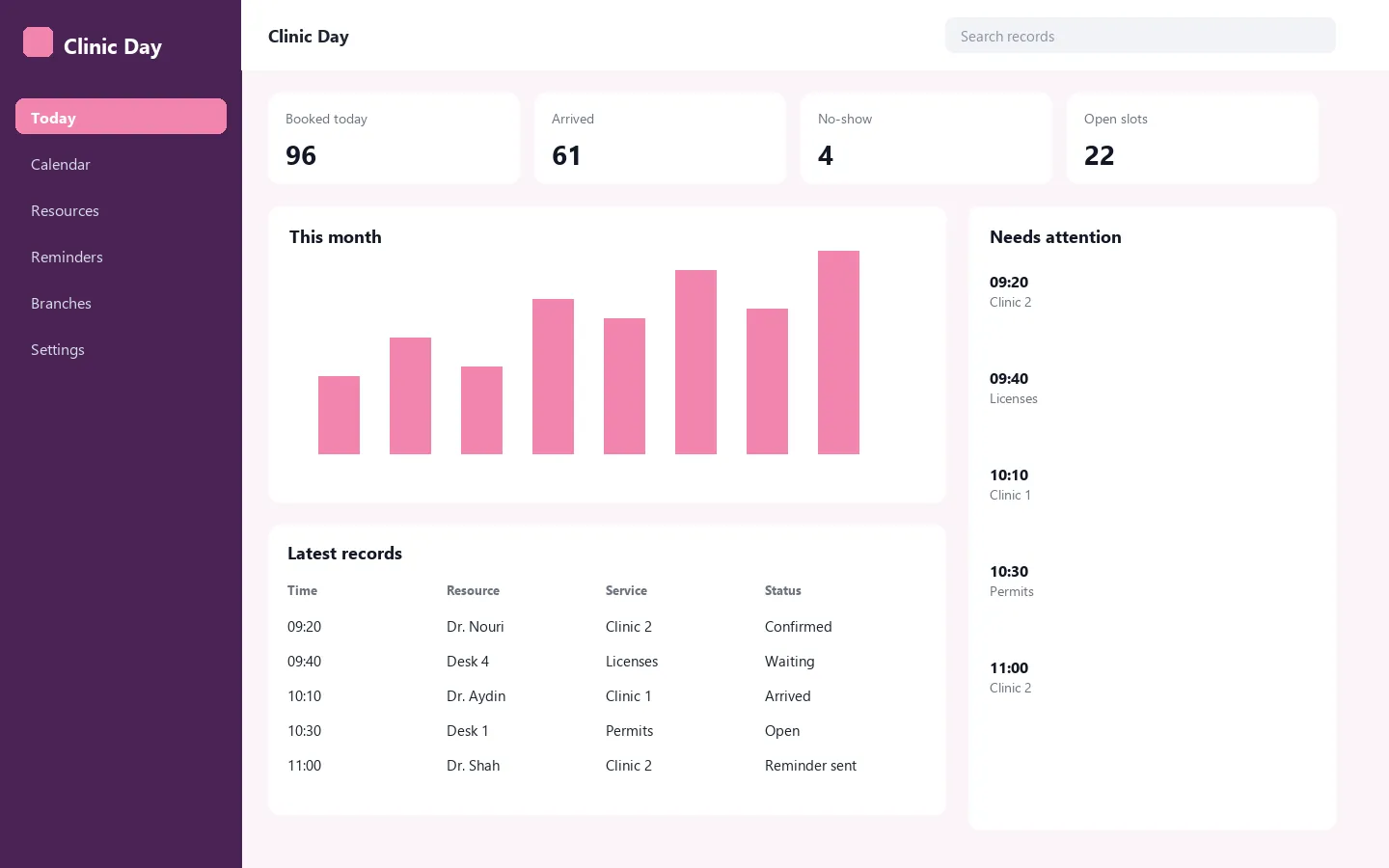
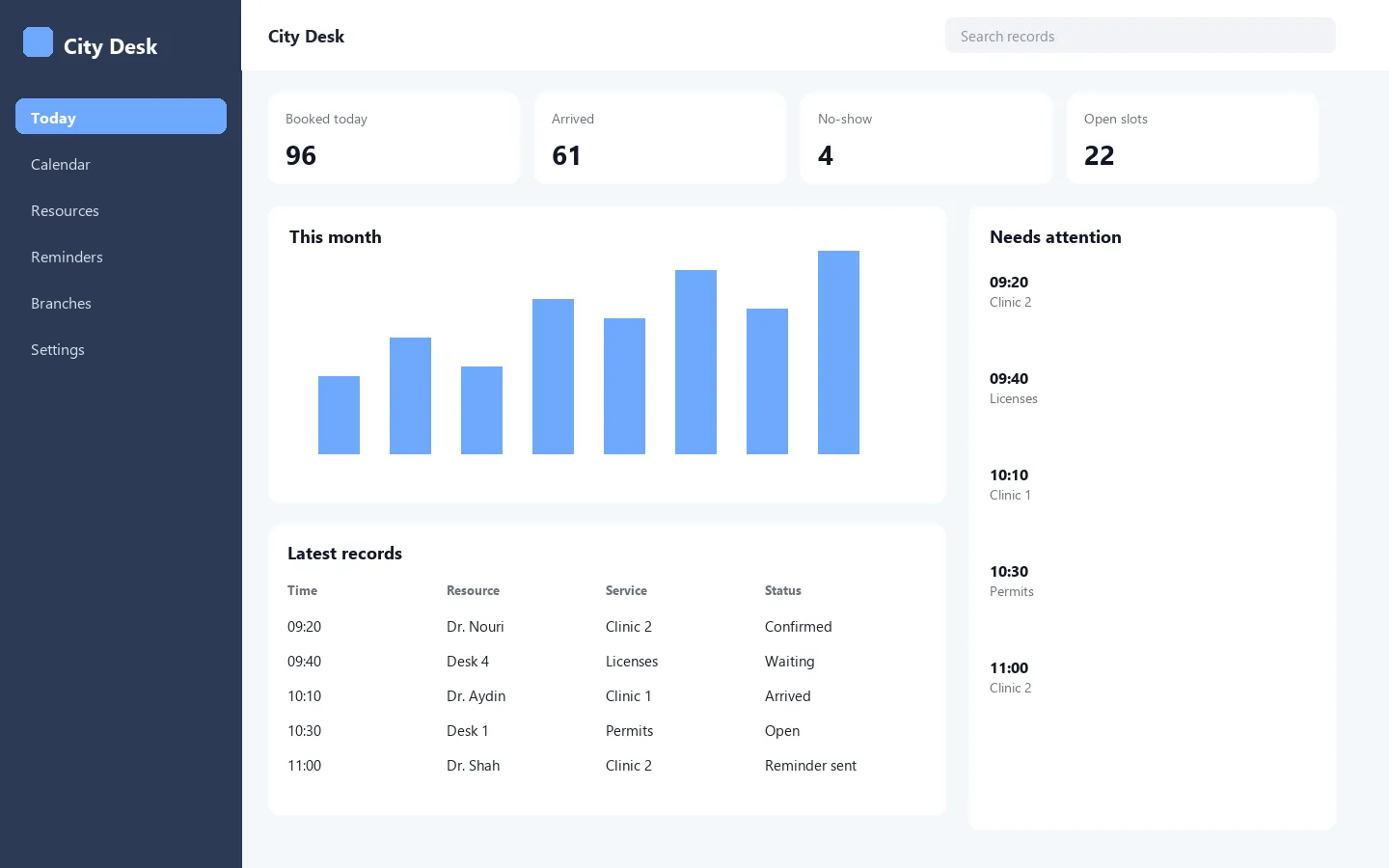
Roles stay separate. The visitor books, the clerk sees the day's queue, and the branch manager reads no-shows and delays from a report. Across branches, a move checks the destination's capacity and frees the origin. The reminder is scheduled. It does not depend on a busy evening's memory.
A working day
The night before, the visitor picks the service, sees the nearby branch, and only tomorrow's open times. The booking is stored and a confirmation text goes out. A separate reminder goes out in the morning. If they do not come, that hour opens for the wait-list or the next booking. Nobody crosses out a line in a diary.
The receptionist moves the visit in the system: whether the destination has room is known at once. At noon the manager sees which service built a queue and which specialist has a high no-show rate. An extra shift is decided from that report, not from a complaint in the corridor.
The result
The queue stops being a guess. The phone line stays free for urgent work. Missed visits drop because the reminder is systematic and an hour is not sold twice.
Several branches still get busy. The busy-ness is visible the same day, not after closing. Capacity is what the system shows, not what the receptionist remembers.
Services
Related work