Enterprise Automation
Before
Work that moves through email, spreadsheets, and paper signatures has no owner. A purchase request sits with one manager, a contract letter is in another binder, and the finance system waits for a number someone must type again. Ask whose desk a document is on and the answer is usually I think I sent it.
A large organization repeats this every day. One approval disappears and purchasing stops for a week. One letter cannot be found and a contract dispute starts from zero. Data is entered twice and wrong twice. Chasing becomes the job, instead of the work itself.
What was built
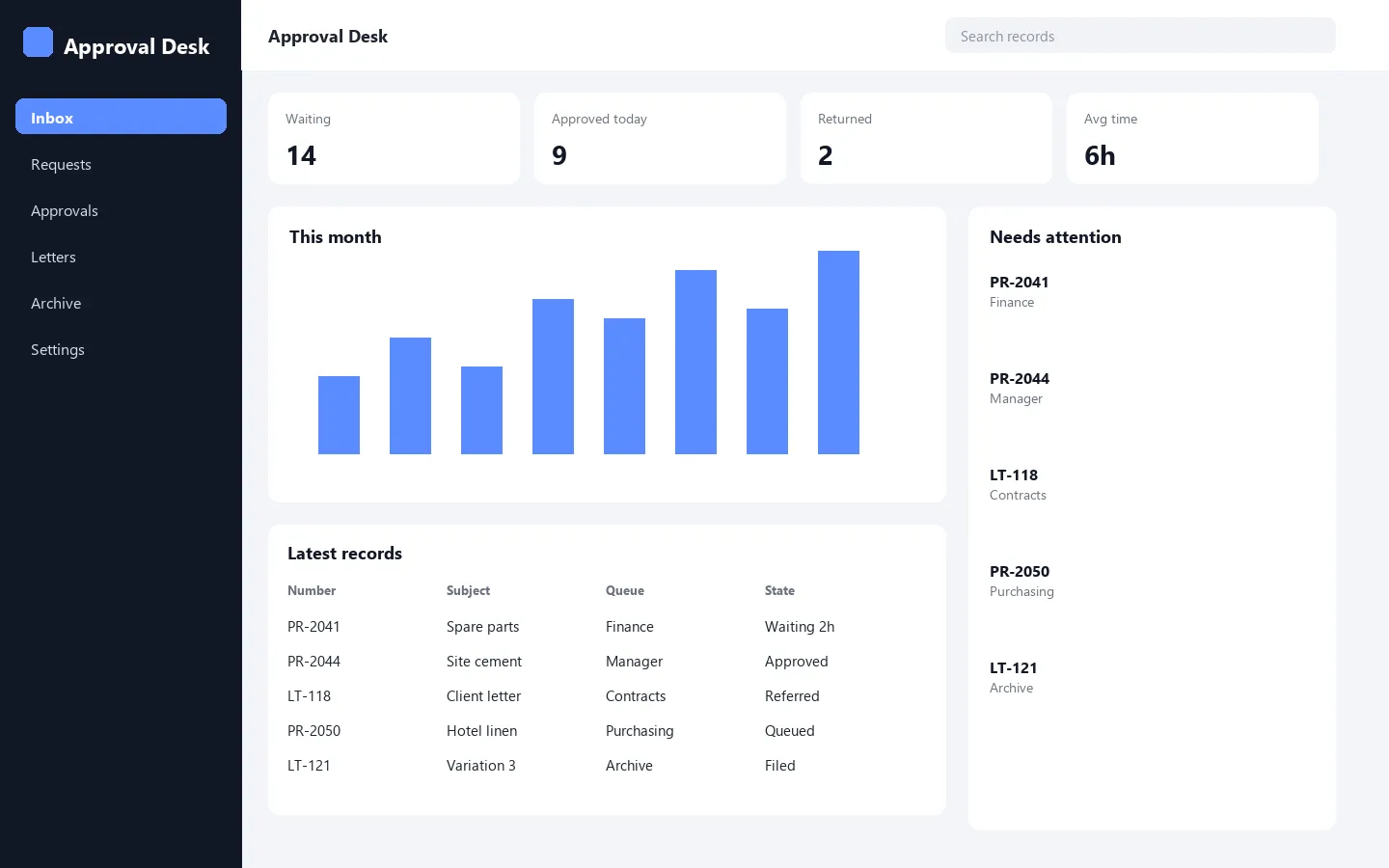
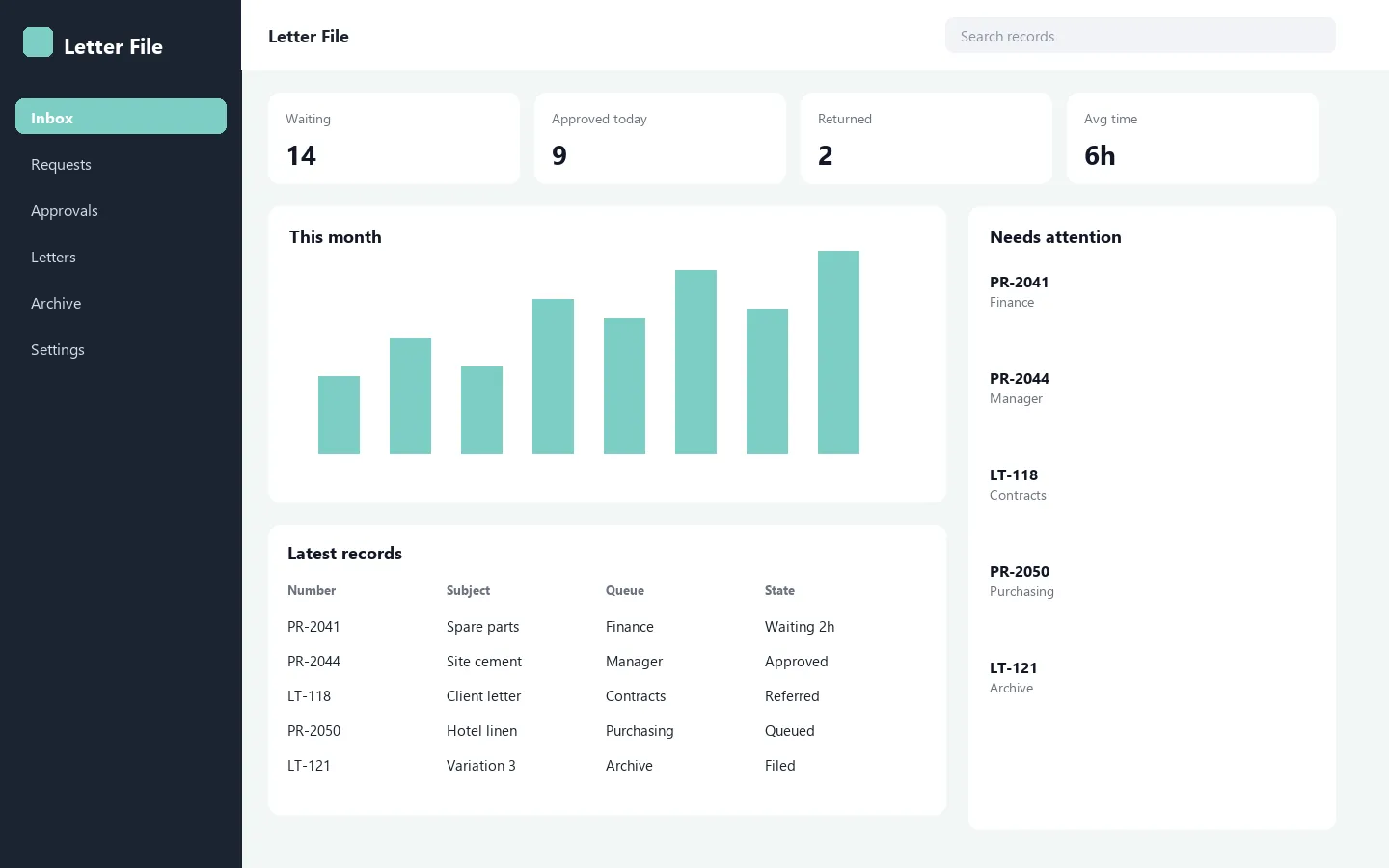
Automation turns that work into a defined workflow. The request, the approval, the referral, and the archive leave a trail: who, when, and with what note. The next step picks the work up from its own queue, not from an inbox. If someone is on leave, the work does not stay locked on their personal desk. The deputy sees the same queue.
The system connects to the software the organization already runs, so the voucher or the letter is not typed again. The aim is not a portal laid on top of the old habit. The aim is that the data is entered once, and every step has to write its decision on the document.
A working day
A specialist files the request with its attachments. The manager opens that document, sees the budget, and either approves it or returns it with one sentence. Purchasing or the registry takes the work from its own queue. If it sits still for three days, the reminder goes to that step, not as a general email to everyone.
Someone who later asks why this purchase happened reads the thread from the start. A related letter, if it belongs to a contract, sits on that file. Accounting builds the voucher from the approved document and does not lift the number out of an email.
The result
Manual chasing drops. A document lost between managers becomes a queue where you can see where it is waiting. A dispute does not start from I never sent it. It starts from the text of the document.
The organization still has multi-step approval. The difference is that the steps are not paper and memory. Each one has a time, an owner, and a note.
Services
Related work